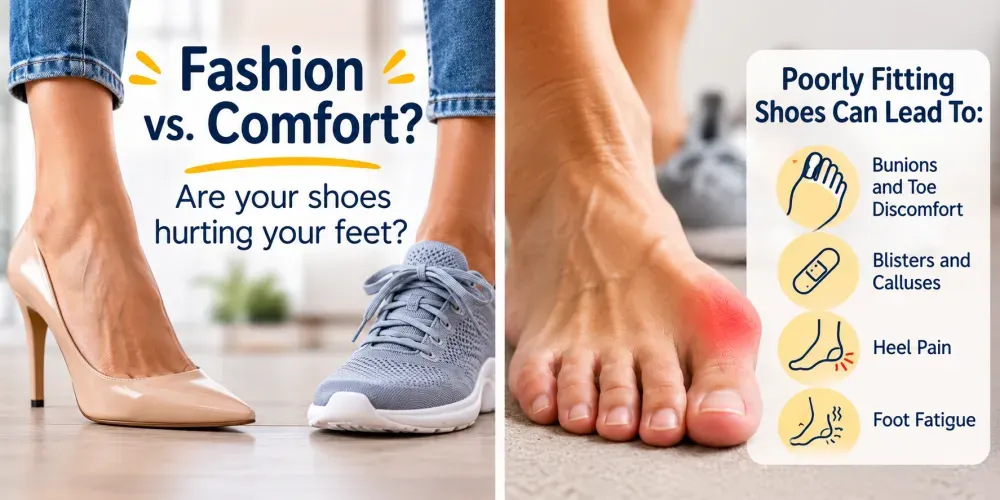
Fashion vs. Comfort: Are Your Shoes Hurting Your Feet?
How Can the Wrong Shoes Affect Your Feet?
Your feet support yourbody weight and absorb impact vwith every step. When shoes don't fit properly or provide adequate support, pressure and friction can become concentrated in certain areas.
Here are some common problems associated with poorly fitting footwear:
- Bunions: Narrow or pointed toe boxes can increase pressure around the big toe joint and aggravate existing bunions. Bunions also involve changes in the alignment of the joint and are not caused by shoes alone.
- Blisters: Repeated rubbing between your skin and footwear can create friction, leading to fluid-filled blisters.
- Calluses and corns: Excess pressure and friction can cause areas of thickened skin, particularly around the toes and balls of the feet.
- Heel pain: Shoes with inadequate cushioning or support may aggravate existing heel discomfort, including symptoms associated with plantar fasciitis.
- Foot fatigue: Unsupportive or poorly fitted shoes can make walking and standing uncomfortable, especially over long periods.
What Should You Look for in a Comfortable Shoe?
Choosing the right footwear can help reduce unnecessary pressure and improve everyday comfort. Consider these features:
1. A wide, roomy toe box: Your toes should be able to spread and move naturally without being squeezed together.
2. Proper arch support: Shoes should provide support that feels comfortable for your foot type.
3. Cushioned soles: Adequate cushioning helps absorb some of the impact created while walking.
4. A secure heel fit: Your heel should feel stable without excessive slipping or rubbing.
5. The right size: Have your feet measured periodically. Foot size and shape can change over time, and one foot may be larger than the other.
When Is It Time To See A Podiatrist?
Don't assume foot pain is simply part of wearing fashionable shoes. Persistent pain, swelling, redness, recurring blisters, numbness, or difficulty walking should be evaluated by a healthcare professional. People with diabetes or reduced circulation should seek prompt advice about new foot problems.
A podiatrist can evaluate your symptom, identify underlying conditions, and recommend appropriate footwear, treatments, or other ways to protect your foot health.